# 4 - SPEECH ACTS
May 31, 2020
Source: Glenney Boggs, C. (2013). Speech Acts: Constative and Performative.
Retrieved from Ted-Ed.
Last visited: May, 31st, 2020. Available at: https://youtu.be/LgmpbXIGpcc
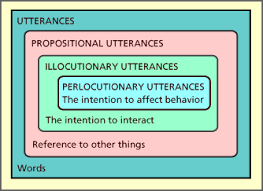
J.L Austin, a British linguist, explains two separate parts of speech: Constatives and performatives being the former sentences that describe something that is true or false, and the latter, statements that denote an action. He states that a constative "IS" and a performative "DOES". According to Mr. Austin, words not only bring about actions, sometimes they are actions themselves and this is known as Speech Acts. To clarify this idea, he provides some examples such as the words "Sorry" and "Not allowed", denoting apologize and sentence. As performatives depend on context and reception, the concept of "Felicity Conditions" is introduced. The felicity conditions are the rules under whitch the performative can be enacted. Performatives must meet certain conditions in order to have power to denote action. They should be understood and clear, they should also be able to be executed and have proper authority. Although performatives meet all these conditions, they may not always be implicitely followed.
Metacognitive analysis
While watching the video and performing the suggested activities, I started reflecting on the importance of handling new tools we are offered nowadays. Tools such as videos, images, video conferences, interactive games and quizes are different ways of encouraging people to get in contact with new information and even go deeper in their process of learning. I found myself exemplifying concepts using my own experiences which of course made me understand and remember the main ideas easier.
It is worthwhile considering the influence the strategies and the material teachers choose for delivering their everyday lessons have not only on the learners´motivation but also on the acquisition of a topic.
Being able to suggest and apply different ways of presenting new material, invites us to explore new fields of research keeping us updated, leaving aside some usual and predictable techniques, thus being able to develop our autonomy as both learners and teachers.
Comentarios
Publicar un comentario